What’s New
What shipped, what it means, and how we build it. The changelog, the monthly recap and the longer reads from the team.
 Latest recap · October 10, 2026
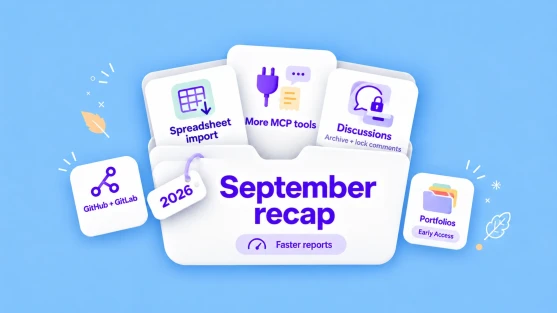
September Recap 2026: Project Portfolios, import from spreadsheets, archived discussions, and much more
September 2026 in ActiveCollab: Project Portfolios (Early Access), spreadsheet import, archived discussions, locked comments, new MCP tools and more.
Read the recap
Latest recap · October 10, 2026
September Recap 2026: Project Portfolios, import from spreadsheets, archived discussions, and much more
September 2026 in ActiveCollab: Project Portfolios (Early Access), spreadsheet import, archived discussions, locked comments, new MCP tools and more.
Read the recap
Changelog
Full changelog- Calendar View for Project Tasks Early accessCloud only See your project's tasks on a month or week calendar, and drag them to new dates.
- New Project Timeline The project timeline is rebuilt from the ground up. It stays fast on large projects, and you can drag tasks to new dates and draw dependencies right on the chart.
- Availability Report and MCP Tools See all team time off for any period in one report, and export it for payroll or HR. Your AI assistant can also tell you who is off and add time off for you.
- Clean Up Your Labels Merge labels that mean the same thing. Owners can merge global labels in System Settings, and project managers can merge the labels of their projects. Their tasks move to the label you keep, and the old label is deleted.
- Connect GitHub and GitLab Cloud only See where each task stands in code without asking a developer. Branches, pull requests, and build status show on the task and in the task list, and developers can complete tasks and log time from their commits.
- Project Portfolios Early accessCloud only See how each client, team or type of work is doing on one screen, without opening every project. Late tasks and tasks over their estimates stand out at a glance.