
Building a solid client base, one that has a genuine trust in you as a service provider, isn't something that happens overnight. It takes time and effort. But most importantly, meaningful client relationships are the ones where the service (and care) is consistent.
Ask any happy client, and they'll tell you why they stay with the marketing agency or business consultancy they've stuck to for years. It's because they deliver a quality service every time. Even if their campaigns don't deliver the desired results every time, their partner-like approach and presence (being available and responsive) are the things that make them stay. The trusting relationship they've built together is what keeps both businesses going and scoring goals in the good times, as well as the bad.
So, whether you're onboarding a new client or simply want to lift your game with existing ones, there's no better way to boost your client trust than to get the foundational basics right. In this guide, we walk you through key strategies that foster and promote trust in professional partnerships and service industry client relationships.
Lay the foundation: Set the stage for trust
Building trust with clients starts before you deliver your first service. The foundation you establish during initial interactions sets the tone for the entire client relationship and determines whether clients feel valued and confident in their choice to work with you. So make an effort to leave a positive impression.
But where do you start?
You start with establishing clear expectations, landing a transparent pricing structure, and setting up a smooth onboarding process. These are the essentials of strong relationships.
Establish clear expectations from day one
The fastest way to damage trust is through misaligned expectations and mixed messaging. This is what makes customer relationships fail from the very beginning. During your first meeting with potential clients, invest time in creating detailed, written agreements that outline exactly what success looks like for both parties.
In a nutshell: Show your clients that you truly get what their business is about and what their priorities are.
These agreements should cover the basics, which for an average service business should include:
Deliverables - Be super clear about what they can expect to get out of the project or campaign.
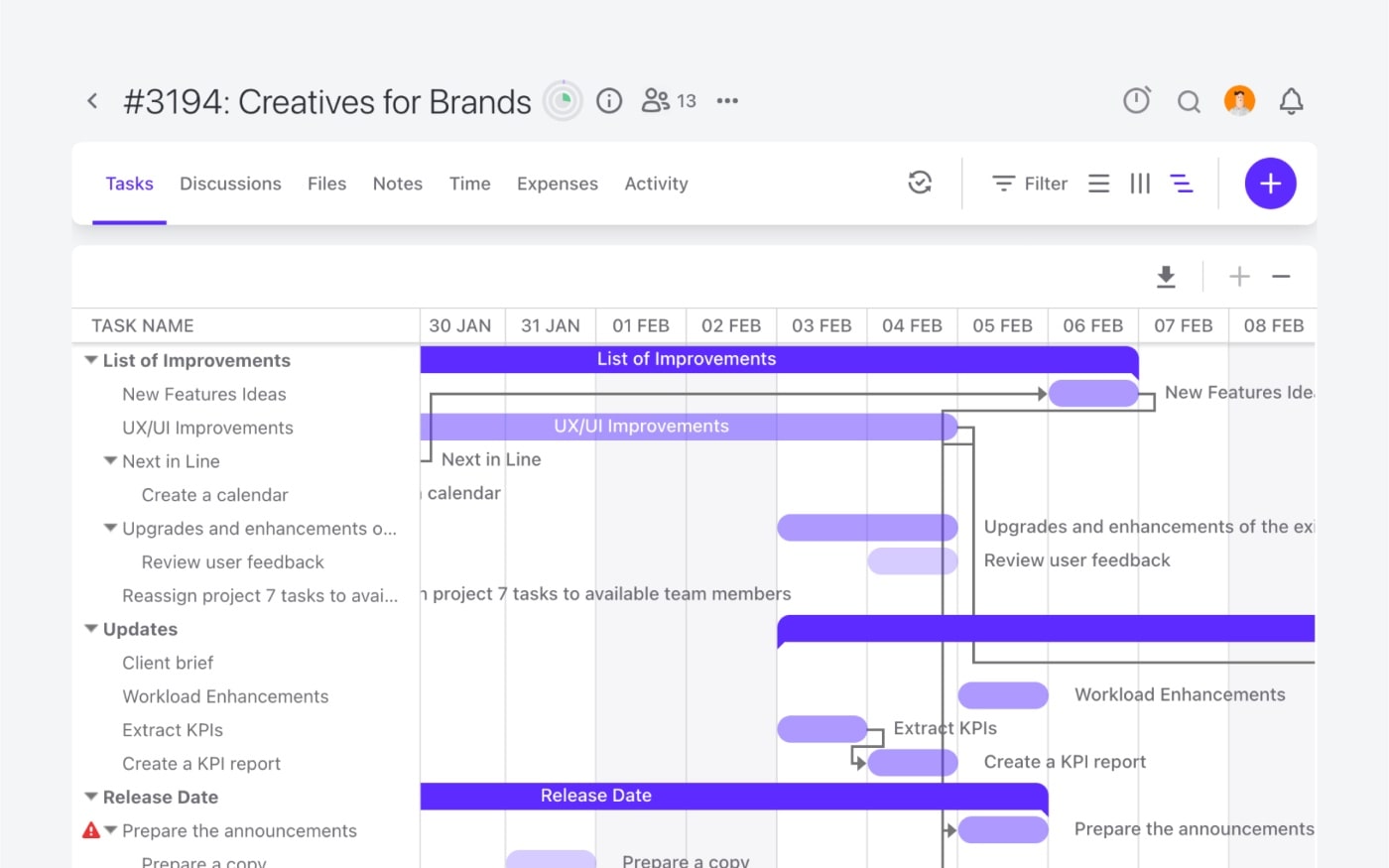
Project timelines - Provide project or campaign roadmaps with milestones and links, and regular updates to live timelines to visually display progress.
Pricing - Before you begin working, be open and honest about prices and additional fees so they don't get any surprises mid-way through a project.
Communication & collaboration - Establish communication and update protocols as well as response times.
Roles and responsibilities - To avoid confusion and wasting time, make sure everyone knows who is responsible for what and when.
This might all sound a little administrative bloat, but you shouldn't underestimate the value of order and clear operating procedures. When you plan meticulously, you show your clients you take their business seriously.
Apart from that, planning and onboarding documentation (which these types of agreements are) help avoid all the misunderstandings that can kill a project and a client relationship.
Many agencies, like Ink Digital, use project management tools like ActiveCollab as their all-encompassing client work hub.
In our recent Spring-Clean Your Agency Operations webinar, John Hutson, Ink Digital's Head of Operations, said their agency has a total of 62 tasks and subtasks in their client and onboarding process! While it sounds like a lot, John is convinced this kind of meticulous planning in the initial phases is absolutely necessary if a project is to be successful, and for a client/agency relationship to work.
The initial onboarding material includes a client welcome message that explains all the agreement points we mentioned above, and a video tutorial showing clients how to use Ink Digital’s project management tool, ActiveCollab.
This last point is one of the agency's preconditions. The reason for this, John says, is that he believes having everyone collaborating on a project or campaign in a single platform is the only way to manage client projects efficiently and successfully.
“Teams is not project management. Slack is not project management. Email is not project management. It’s a car crash waiting to happen", said John.
When you have the entire client project housed in one place, with all the updated campaign information (such as tasks, timelines and files) and all communications and collaboration backlogs, you have a guarantee that everyone is up to date and knows how each task is progressing toward the end goal.
Create transparent pricing structures
Nothing erodes trust faster than surprise costs or unclear billing practices. Develop pricing structures that clients can easily understand and budget for, with detailed breakdowns that show exactly what they’re paying for and why.
You can achieve this in a couple of ways:
- Consider offering different service packages at various price points
- Define value propositions for each package
- Be upfront and clearly outline extra costs for customization
- Translate your services into plain English so that clients understand, not industry terms and jargon
- Be transparent about where the money is being spent
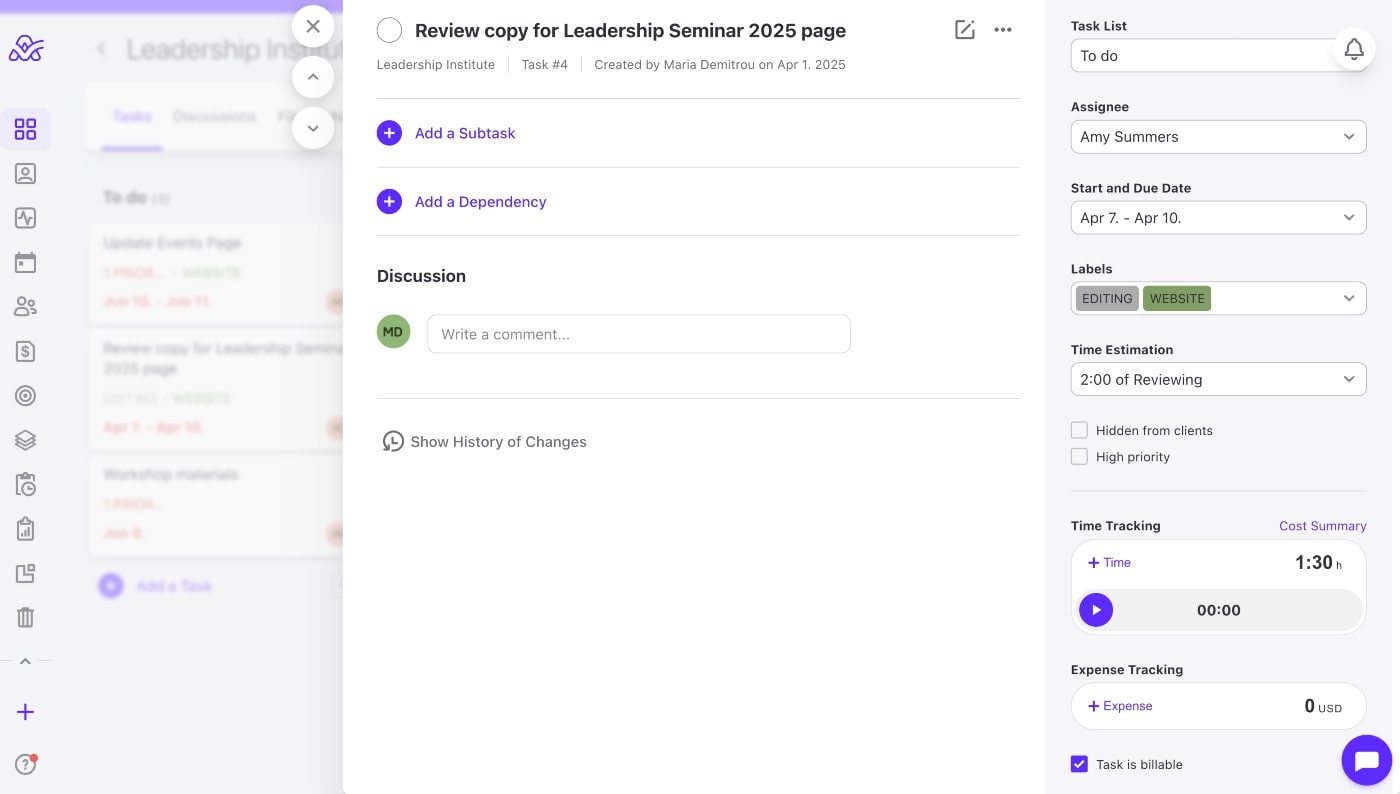
ActiveCollab lets you choose whether or not you want to give your clients access to view the time spent by your team on individual tasks.
Don't underestimate or undermine the value of transparency in billing. Your clients need to know what to expect when their invoice comes through each month. When you clearly define what they are paying for each month, where they might incur extra costs (for example, for out-of-scope items), and how much those costs can be, you instantly set the foundations for a trusting billing relationship.
Implement consistent onboarding processes
The inital client onboarding experience is one of the most valuable opportunities you'll have to set the foundations of trust at the very beginning. It's where your clients get the first real taste of what their relationship with your agency is going to look and feel like.
When you set up a Standard Operating Procedure (SOP) that you follow with every client, you can be sure that every client will know exactly what to expect. And when you do this properly (like Ink Digital does), you send out the message that you're paying attention to the details, are genuinely competent, and you also give your clients a clear idea of what lies ahead.
To do the onboarding part right, copy the approach Ink Digital has taken and create your own standardised onboarding process that includes:
- A welcome package that tells them who to contact
- A detailed project plan with a timeline they can visualise
- Secure communication channels and a way to log in
- A clear introduction to the team, their roles, and how the agency works
- Provide regular check-ins and progress updates
If you take this kind of dedicated approach, you will instantly reassure clients that they're in good hands. And this means a lot, especially when you're starting a new work relationship.
Communication excellence: The trust-building engine
One of the easiest things service providers can do is respond straight away. You don't necessarily have to give your clients the answer immediatel,y but let them know you've seen their query and are working on getting the answer. Tell them when you will come back to them
Being available and consistent is one of the best ways of maintaining the trust you initially built. So set some basic communication ground rules :
- Your initial response time (try to make it within 4 hours, maximum within the same day)
- For non-essential stuff, ask the client for a reasonable deadline, depending on the current workload
- For urgent requests, tell them you'll get back to them ASAP, but give them some timeframe
These are all the little things that count. Even a simple "got your message, I'll be back with an answer tomorrow afternoon" can go a long way towards keeping your clients content. As long as you stay connected and keep them updated, the relationship will stay intact.
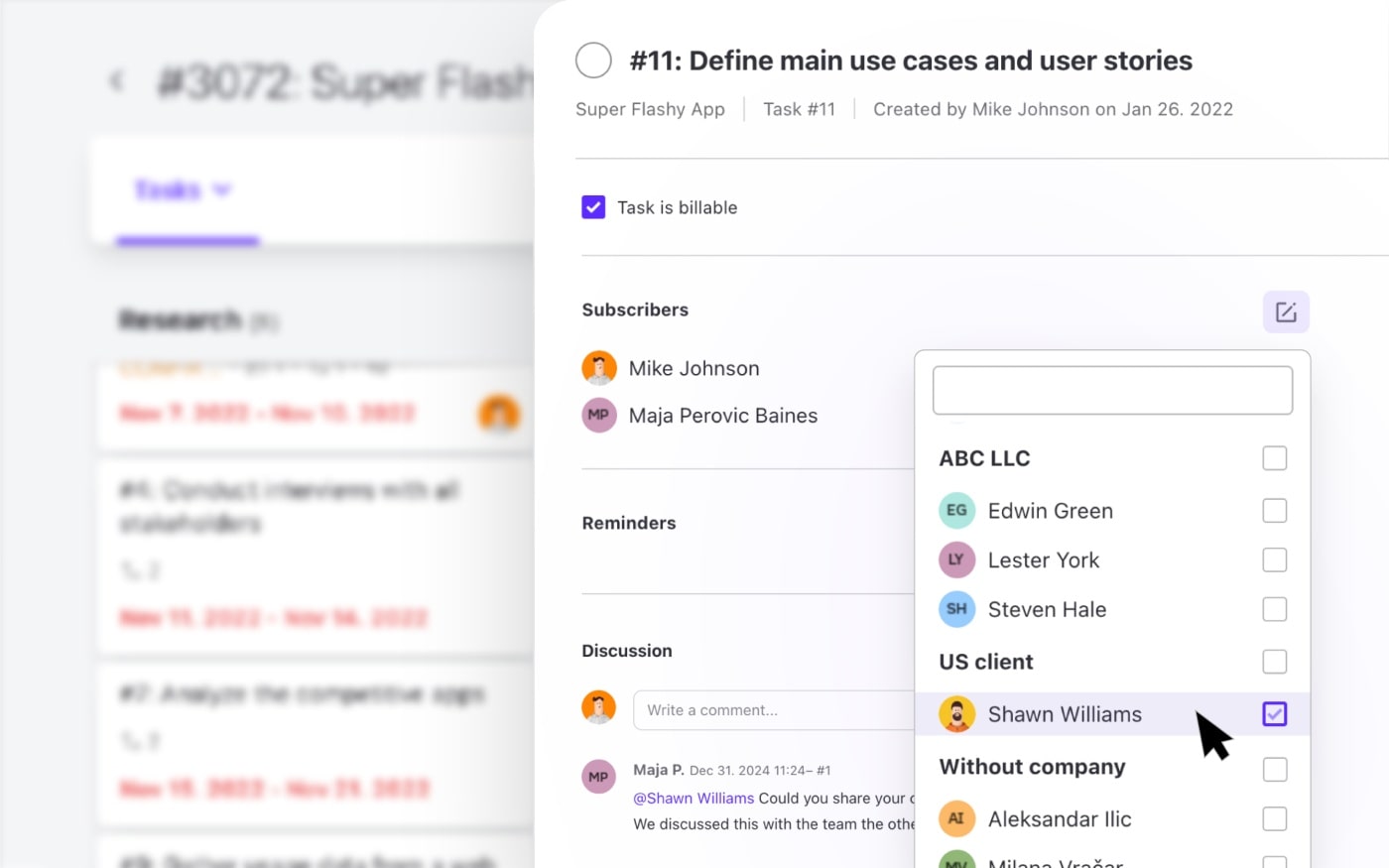
With project management tools like ActiveCollab that include client management communications features, you can include clients in project flows and tasks. This minimizes the risk of missed emails and communication mishaps. When you give your clients access, you choose the tasks they can and can't see, and let them add comments and mentions on work that your team can see in real time.
Schedule regular check-ins
The other important part of communication is proactive and regular check-ins. Regular check-ins with your clients (ideally every two weeks) gives everyone a chance to bring up any concerns about how the project is progressing.
Regular catch-up meetings serve a number of purposes:
- Show your clients you're committed to their project's success
- Give you the chance to catch any issues early before they get out of hand
- Keep things transparent and let everyone see what's going on
- Give the personal touch in an otherwise pretty transactional relationship
Even short, quick check-ins with a bit of small talk can take your team's professional relationship with clients to a deeper and more trusting level.
Give context and explain the logic behind your advice
The fastest way to make clients feel excluded is through excessive use of technical terminology. While expertise is important, your ability to explain complex concepts in simple terms actually demonstrates deeper understanding, which builds greater confidence and promotes strong client relationships.
Focus on:
- Explaining the “why” behind your recommendations
- Use analogies and examples that clients can relate to
- Confirms understanding before moving forward
- Provide written summaries of action items & verbal discussions
- Ask questions to ensure clarity
When clients understand what you’re doing and why, they become partners in the process rather than passive recipients of your services.
Provide proactive project updates
One of the worst things you can do is wait for your client to ask for an update. As a service provider, you need to anticipate their needs upfront.
To make sure this doesn't happen, do your best to cover the following in each scheduled update:
- What's done and what's next on the list
- Where things are stuck and what you're doing to fix them and get moving along
- Any changes to the plan, with a brief explanation of how and why this happened
- Has dedicated client time for them to share their thoughts or give feedback
Do your best to engage, connect, and establish a reputation of respect, empathy, and support in updates.
When issues do come up, talk to your team and work with the necessary stakeholders to proactively resolve outstanding glitches and pick up potential future risks.
Reliability and accountability: Deliver on your promises
Reliability and accountability come down to two simple things: doing what you said you would, by the when you said you would. That's how you build and maintain trust through small, everyday actions.
If you've tried this approach, you'll know, from first-hand experience, that nothing gets trust off to a flying start like just doing what you say you'll do, every time.
Sticking to these trust-building fundamentals always is what guarantees a long-term client relationship that will set you apart from the rest. Getting this part right most of the time will deliver good results; it's only the ones that do this 95-100% of the time that will stand out for their clients, every time.
Meet deadlines or communicate early
One of the places where reliability and accountability are most appreciated (and needed) by clients is in the deadline promises space. There is no greater trust builder than delivering when you said you would.
The problem with this concept is that sometimes, things simply don't go as planned. And when this happens, instead of communicating to the client as as early as possible, some agencies do one of two things:
- Deliver the work on time, but that work is of subpar, mediocre quality
- Choose to keep the late deadline to themselves until the very last minute, which damages the relationship
If you want to avoid this scenario, here are a couple of things you can turn to:
- Build buffer or slack time into initial project estimates
- Give advance notice of potential delays (minimum 48 hours when possible)
- Explaining the reasons for delays without excuses
- Offering solutions or alternatives to minimize impact
Clients understand that complications happen, but they lose trust when they’re surprised by delays or feel like they’re not getting the full story about project challenges.
Take Full Ownership of Mistakes
How you handle mistakes often matters more than the mistake happening in the first place. Clients (generally) are not unreasonable. They know that mistakes are going to happen from time to time. It's how you handle mistakes when they do happen that builds (or loses) trust.
When mistakes do happen, here are the things you should do to make sure you don't damage the trust:
- Own the error immediately, and provide a full and clear explanation
- Take responsibility, without trying to shift blame or pointing fingers
- Explain how you'll fix it, and how you'll prevent similar mistakes in the future
- Step up, offer some kind of compensation
- Genuinely follow through on all the commitments you made to fix the problem
What's interesting about the mistakes scenario is that it presents a unique opportunity. One where you can actually end up building a stronger relationship with your clients. But that will only happen if you follow each one of the pieces of advice above!
Use Project Management Tools for Transparency
Another really simple and efficient way of staying accountable and keeping your clients in the loop at all times is using a project management tool that is designed specifically for service businesses. The important part here is the last part. You need a tool that allows for all the workflows agencies need and depend on.
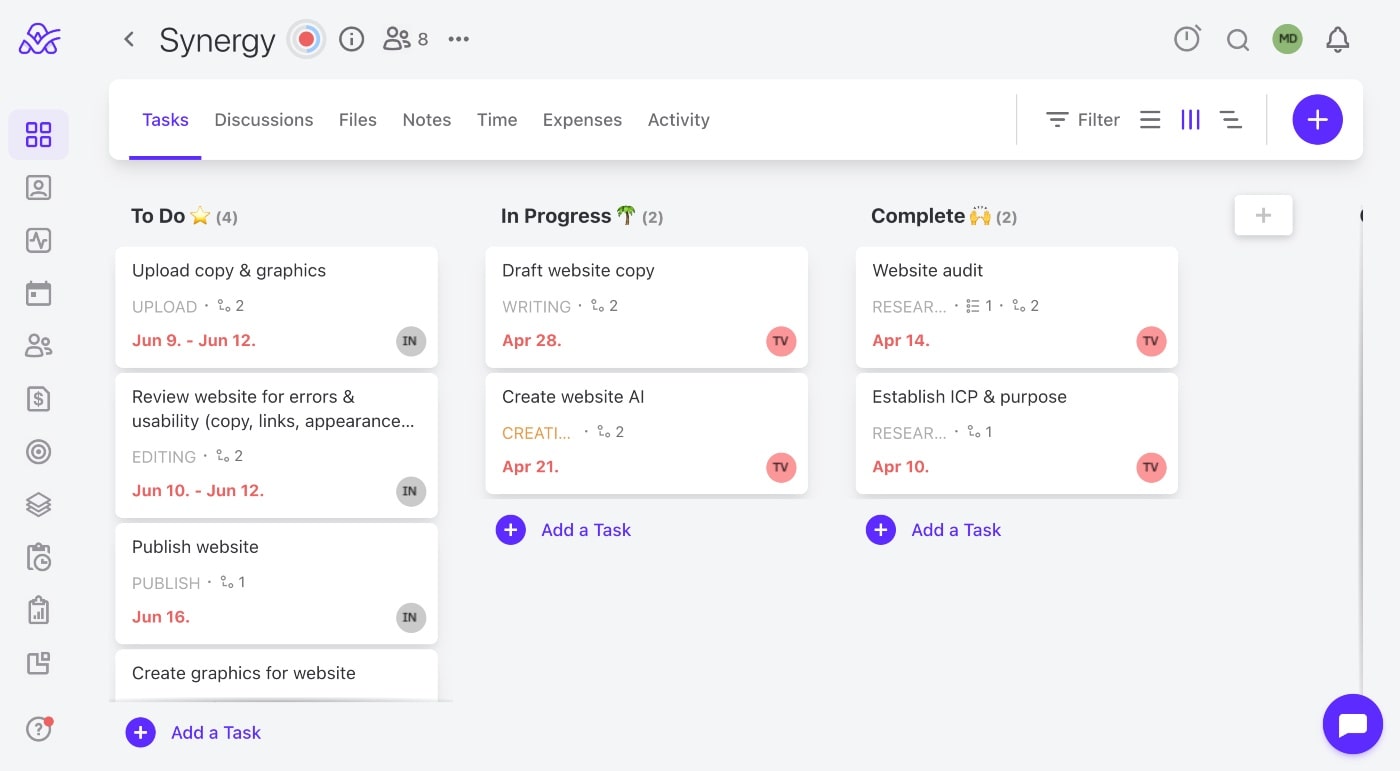
Those tools are the ones that give clients a real-time view into where a project's tasks and milestones are at instantly. This is a huge deal because it helps build trust and reduce the anxiety that can come with not knowing what's going on.
As a service business, the features you should be looking for in your project management tool include the ability to:
- See the project timeline and where all its tasks are at right now
- Check completed deliverables and see what's still in progress
- View how you've been allocating time and resources
- Communicate directly with team members working on their project
- Get automated updates on how things are going
ActiveCollab's platform lets you do all this through the tool, so your team and your clients work as one.

By getting onto a platform that lets you take on this open service relationship approach, you can quickly turn your clients into partners, where you can both celebrate the client's goals and successes.
Connection and Authenticity: Be an extension of their business
While professional competence forms the foundation of trust, personal connection creates the bond that transforms good or strong client relationships into exceptional partnerships. Authenticity and genuine care for client success separate memorable service providers from forgettable ones.
Show genuine enthusiasm for client success
Absolutely nothing beats the genuine enthusiasm an agency shows for a client's success. It is truly one of the most powerful and most contagious trust-building things you, as an agency founder, can do.
When clients see that you honestly believe in their brand, business, and product, and that your team is doing their best work, and putting in the hard yards into all their marketing efforts, they will stick around for the long term, guaranteed.
Here are some tips on how you can show your enthusiasm:
- Be genuinely stoked about their big and small wins
- Be proactive and always look for ways to make things better
- Go above and beyond to help them when they seek your expertise
- Be proud of yourself and your team, and showcase it across your channels
Anticipate client needs & offer special treatment
Exceptional service providers develop the ability to anticipate client needs and address them proactively. Essentially, you want to be a partner that's like an extension of their team, not an external provider.
Anticipation and special look like this:
- Spotting a problem before your client does and bringing it to their attention
- Finding ways to improve or tweak things before the client asks for help
- Always staying one step ahead of industry changes that could impact your client's business
- Getting onto urgent requests instantly, giving your clients the VIP treatment they'll appreciate
- Giving clients access to senior leaders in your team when things get complicated
When clients notice you're always a few steps ahead and that you're offering a little extra help when needed, they start to lean on your guidance and consider you an essential partner in their success.
Provide Honest Professional Opinions
Clients love it when their agencies are filled with experts. They also love and appreciate honest, informed opinions, which they won't get elsewhere. In most cases, valuable clients don't want to be ego-stroked; they want to be guided. That's why they're paying you, an agency, to do their marketing for them!
So building trust means being brave enough to give it to them straight when that's what they need to hear.
What does this look like in reality? It looks like the following:
- Calling out bad ideas (even if they are their ideas) if they are never going to get the results they want
- Suggesting a better, proven approach that would work better
- Being straight-up about what you can and can’t deliver
- Saving them from investing resources in the wrong campaigns that fill your pockets but not theirs
This kind of honesty might cost you money upfront, but in the long run, it will end up being an investment because you are building the foundations for a client that will be around for a long time to come!
Feedback and Continuous Improvement
The most successful client relationships involve continuous evolution and improvement based on honest feedback and changing needs. Creating systematic feedback loops demonstrates your commitment to excellence and shows clients that their input directly influences how you serve them.
Proactively Solicit Client Feedback
Don’t wait for clients to volunteer feedback. You need to actively seek their input through formal and informal channels. Regular feedback collection shows that you value their perspective and are committed to continuous improvement.
Here's what effective feedback collection involves:
- Post-project surveys with specific, clear questions
- Casual mid-project check-ins with clients to gauge satisfaction and spot any issues
- Annual client reviews to go over how they feel about the project and overall relationship
- Ad-hoc conversations to hear what's working and what's not
The idea is to make feedback collection feel like just another part of the service, not some extra thing you have to do.
Respond to Feedback with Gratitude and Action
The way you handle feedback (especially negative feedback) can either make or break client trust. When a client sees their input has been taken seriously and used to make real changes, they're going to be all in on the relationship.
Here are some things you should keep in mind when getting feedback:
- Thank clients for all feedback, even if it's not exactly what you want to hear
- Ask follow-up questions to make sure you understand their concerns clearly
- Explain how you'll deal with their concerns, don't just say you'll "take care of it"
- Follow up when the changes have been made, to make sure their needs have been met
- Let clients know when you've seen positive changes thanks to their feedback and input
When your clients see that their feedback has resulted in real, positive changes, they are much more likely to remain as a long-term partner than just a passive recipient of your professional services.
How ActiveCollab helps you earn & keep client trust
What many service providers forget about trust is that it's made up of small things that need to happen often, over a long period of time. It's a huge concentration of small acts that accumulate to create an indestructible core that becomes your trust engine.
So, how do you get this trust engine going? You build out a team and workflows around the qualities and values of honesty, reliability, collaboration, transparency, and authenticity.
Clients stay loyal to agencies that live and breathe these ideals. And they partner with service providers that have systems and operations set up in a way that lets them live those values daily.
ActiveCollab is one of those. As a specialized project management platform, it's been made with the needs of service businesses in mind. It's a tool that brings structure, efficiency, and transparency to every stage of client work, from onboarding to project execution and invoicing.
If you need a single tool that lets you run client projects from initiation to invoice and gives every party visibility and access to frictionless communication so everyone stays aligned, then you need to try ActiveCollab.
Sign up for our 14-day free trial or book a demo with one of our people to get a personalized walkthrough of the platform.